.png)
Finding the right open-source PHP booking system can be overwhelming. Whether you’re building an online appointment scheduler, hotel reservation platform, or ro...
Quick Summary: If you need a free, self-hosted open-source PHP booking software solution, this guide covers every major option, from hotel reservation systems and appointment schedulers to travel agency platforms. We compare features, ease of setup, API support, and real-world use cases so you can choose the right tool without wasting time.
What Is Open Source PHP Booking Software?
Open source PHP booking software is a self-hosted reservation management system built with PHP and typically backed by a MySQL or MariaDB database. Unlike SaaS tools, you download the source code, install it on your own server, and control everything: the data, the design, and the features.
These systems power everything from hotel room reservation engines and appointment booking platforms to travel agency management systems and coworking space schedulers. Because PHP runs on virtually any shared hosting or VPS plan, these tools are cost-effective to deploy and easy for developers to extend or customise.
Common use cases for open source PHP booking software include:
- Online hotel and room reservation systems
- Appointment booking for clinics, salons, and freelancers
- Travel agency booking panels and flight reservation portals
- Coworking space and resource scheduling
- Equipment and venue rental management
Why Choose Open Source Over SaaS Booking Platforms?
Before diving into the tools, here's why thousands of developers and business owners choose open source PHP solutions over paid SaaS alternatives like Calendly, Booksy, or Lodgify:
| Factor | Open Source PHP | SaaS Booking Tools |
| Cost | One-time setup cost only | $50-$300/month recurring |
| Data Ownership | 100% on your server | Vendor-controlled |
| Customization | Full source code access | Limited to their UI |
| Integrations | Build anything via API/code | Pre-built only |
| Scalability | Scale your own infrastructure | Vendor plan limits |
| White-labeling | Full control | Paid add-on or unavailable |
The biggest advantage of open-source PHP booking software is data privacy and total flexibility, especially for travel agencies, healthcare providers, and hospitality businesses handling sensitive customer information.
Top 6 Open Source PHP Booking Systems in 2026
1. Easy!Appointments: Best for Service-Based Businesses
Primary use case: Appointment scheduling for clinics, salons, consultants, freelancers
Tech stack: PHP 8+, MySQL, Bootstrap
License: GPL v3
GitHub stars: 10,000+
Easy!Appointments is one of the most actively maintained open-source appointment booking systems available. It has a clean, mobile-friendly interface that both customers and staff can use without training.
Key features:
- Customer self-booking with availability calendar
- Multi-staff and multi-service support
- Google Calendar two-way sync
- Email and SMS notifications
- REST API for custom integrations
- Appointment status tracking (pending, confirmed, cancelled)
- Multilingual support (20+ languages)
Best for: Any service provider who needs customers to self-schedule doctors, dentists, hair salons, tutors, and fitness coaches.
Limitations: Designed strictly for appointment scheduling. Not suitable for hotel room reservations or resource-based bookings.
2. QloApps: Best Open Source Hotel Booking System
Primary use case: Hotel management, BnB reservations, hospitality businesses
Tech stack: PHP 7/8, MySQL, Smarty templates
License: Open Source (GPL)
Active installations: 2,000+
QloApps is the most fully featured open-source hotel booking system in the PHP ecosystem. It functions as both a front-end booking engine (for your website) and a back-end property management system (PMS).
Key features:
- Room type and rate management
- Seasonal and dynamic pricing
- OTA channel manager export (Booking.com, Expedia)
- Online payment gateway integration
- Multilingual and multi-currency support
- Guest management and check-in/check-out tracking
- Booking confirmation emails with PDF vouchers
- Amenities and room photo management
Best for: Hotels, BnBs, hostels, and vacation rental businesses that need a complete reservation management system without monthly SaaS fees.
Limitations: Heavier setup than simpler tools. Requires PHP hosting knowledge and time to configure.
3. Booked Scheduler (LibreBooking): Best for Multi-Resource Scheduling
Primary use case: Room, equipment, and staff resource scheduling
Tech stack: PHP 7/8, MySQL
License: GPL v3
Booked Scheduler (forked and maintained as LibreBooking) is the most flexible general-purpose booking system on this list. It's not limited to appointments or hotel rooms; it handles any bookable resource.
Key features:
- Multi-resource booking (rooms, vehicles, equipment, people)
- User roles and permission management
- iCal and Google Calendar sync
- REST API with full documentation
- Email notification system
- Blackout dates and approval workflows
- Reporting and usage analytics
- LDAP/Active Directory authentication
Best for: Corporate offices, universities, coworking spaces, libraries, and any organisation managing multiple shared resources.
Limitations: Initial configuration can be complex. The UI feels dated compared to more modern tools.
4. MRBS (Meeting Room Booking System): Best Lightweight Option
Primary use case: Room and space booking for offices, schools, and institutions
Tech stack: PHP 5/7/8, MySQL/PostgreSQL
License: GPL v2
MRBS is one of the oldest and most battle-tested room booking systems available. It's extremely lightweight, which makes it ideal for internal use in organisations that need simplicity over aesthetics.
Key features:
- Room/space scheduling with a visual calendar
- LDAP/Active Directory authentication
- Email reminders and notifications
- Recurring booking support
- Multi-site and multi-room support
- PostgreSQL support (rare among PHP booking tools)
Best for: Schools, hospitals, government offices, and enterprises with internal meeting room management needs.
Limitations: Outdated UI with minimal mobile support. No REST API. Not suitable for public-facing customer booking.
5. phpScheduleIt (Legacy → Now Booked)
Primary use case: Educational institutions and legacy enterprise systems
Tech stack: PHP, MySQL
License: GPL
The original phpScheduleIt has effectively evolved into the Booked Scheduler (above). If you're running a legacy PHP ScheduleIt installation, migration to LibreBooking/Booked is the recommended path.
Key features:
- Resource reservation system
- Report generation
- Email reminders
- User quota management
Best for: Organisations already running phpSchedule It is who need continuity during a system migration.
Limitations: Minimal active development on the original branch. Use Booked Scheduler instead for new installations.
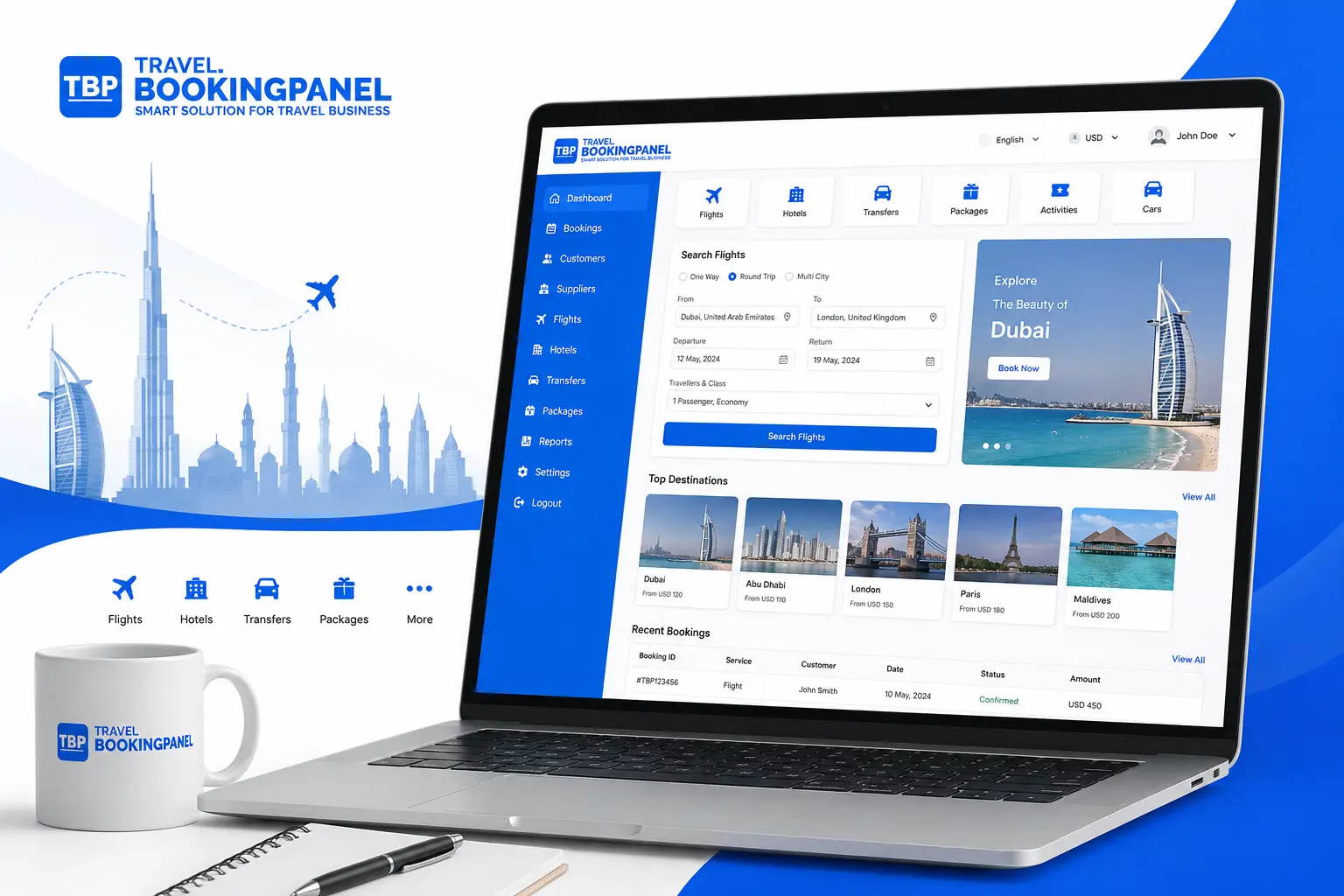
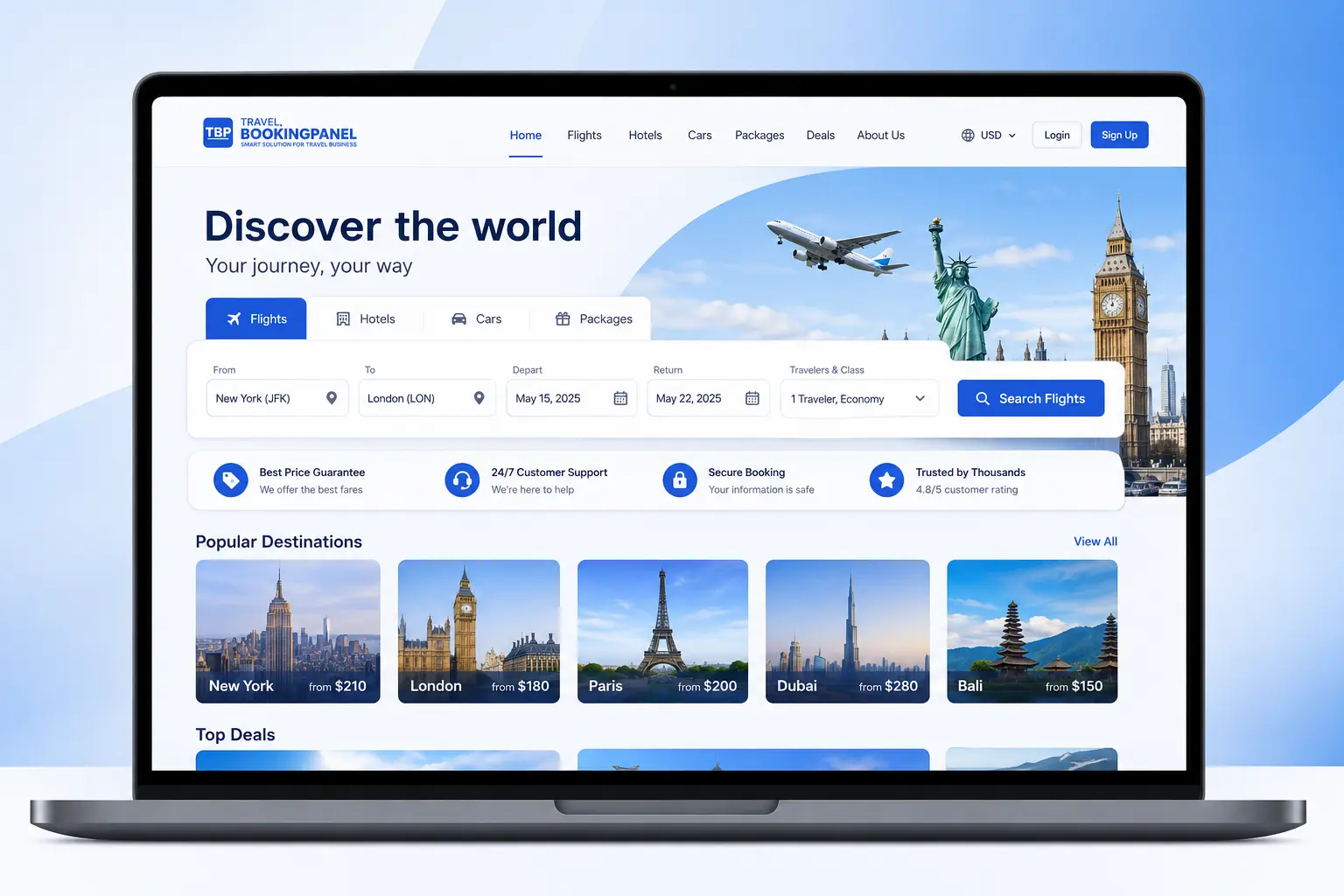
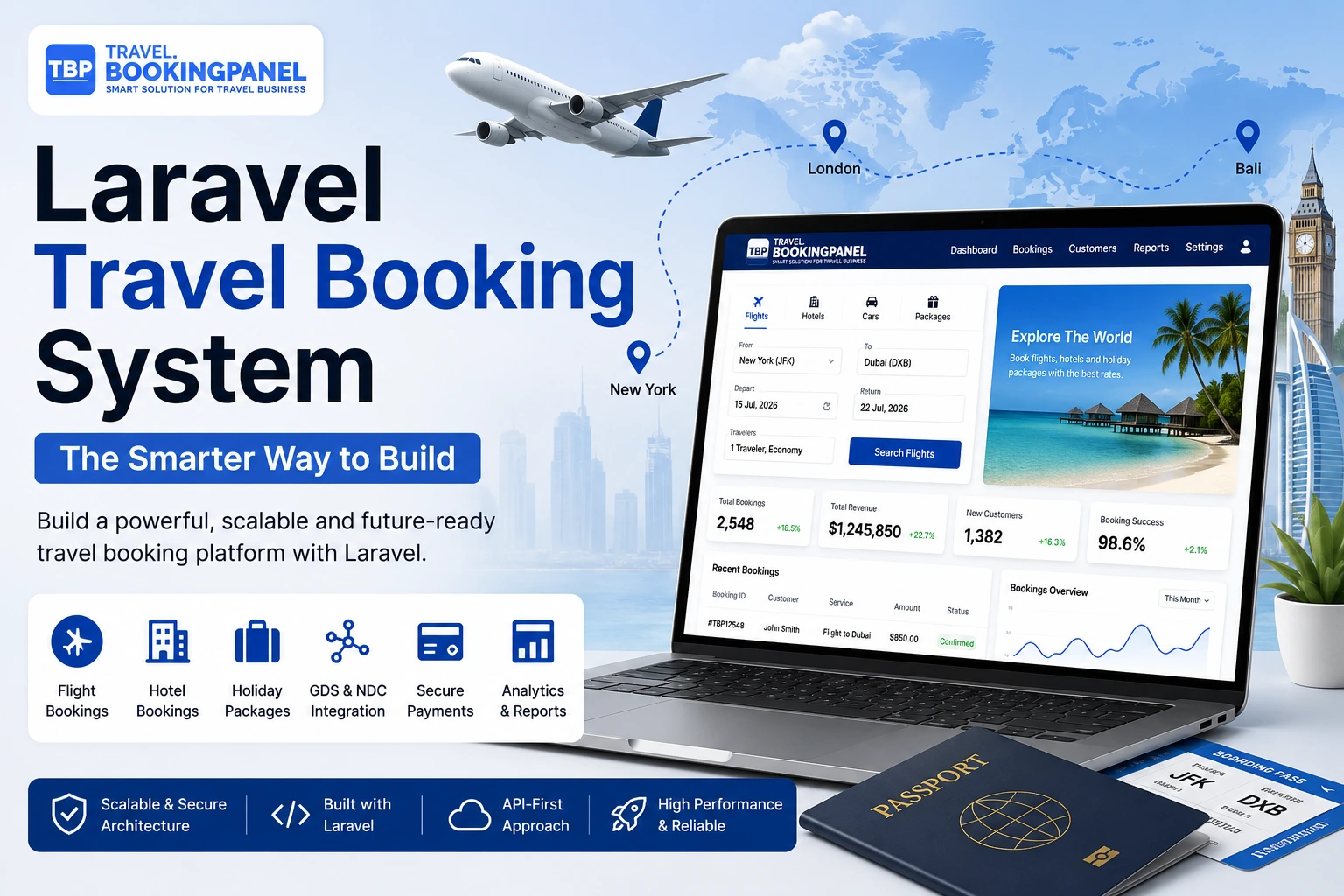
6. TravelBookingPanel: Best for Travel Agencies & Flight Portals
Primary use case: Flight booking panels, travel agency management, Umrah portals
Tech stack: PHP 8, Laravel, MySQL
License: Commercial (one-time purchase, full source code included)
Deployment: 15 minutes
While not strictly "open source," TravelBookingPanel deserves a place here because it solves a problem none of the above tools address: travel agency-specific booking workflows.
If you're building a B2B or B2C travel portal with flight search, hotel APIs, Umrah packages, or tour management, this is a purpose-built solution with full source code ownership.
Key features:
- GDS/API integration (flights, hotels, transfers)
- Agent panel with role-based access
- Commission and markup management
- Umrah and religious tour management module
- WhatsApp and email notifications
- Multi-currency and multi-language
- One-time payment, no monthly fees
Best for: Travel agencies, OTAs, and Umrah operators who want the flexibility of open source but need enterprise-grade travel features out of the box.
👉 View Live Demo of TravelBookingPanel
Complete Feature Comparison Table
| Software | Best Use Case | Calendar Sync | Mobile UI | REST API | Multilingual | License | Cost |
| Easy!Appointments | Appointment booking | Google + iCal | ✅ Yes | ✅ Yes | ✅ Yes | GPL v3 | Free |
| QloApps | Hotel reservations | ✅ Yes | ✅ Yes | Plugins | ✅ Yes | GPL | Free |
| Booked/LibreBooking | Multi-resource | iCal | Moderate | ✅ Full REST | ✅ Yes | GPL v3 | Free |
| MRBS | Room scheduling | Limited | ❌ Basic | ❌ No | Partial | GPL v2 | Free |
| phpScheduleIt | Legacy/education | Limited | ❌ Basic | ❌ No | Partial | GPL | Free |
| TravelBookingPanel | Travel agencies | ✅ Yes | ✅ Yes | ✅ Yes | ✅ Yes | Commercial | One-time |
How a PHP Online Booking System Actually Works
Understanding the technical flow of open-source PHP booking software helps you choose the right system and customize it properly. .png) Step-by-step flow:
Step-by-step flow:
- User visits the booking page and searches by date, service type, or location
- Availability check system queries MySQL for open slots or rooms
- Booking form: user enters details, selects options
- Payment processing integrated gateway (Stripe, PayPal, or offline)
- Confirmation email sent to the user and the admin simultaneously
- The admin dashboard booking appears in the management panel
- Reminders, automated follow-up emails, or SMS sent before the appointment
How to Deploy an Open Source PHP Booking System (Step-by-Step) .png) Requirements
Requirements
- PHP 7.4 or 8.x
- MySQL 5.7+ or MariaDB 10+
- Apache or Nginx web server
- Composer (for Laravel-based tools)
- SSL certificate (free via Let's Encrypt)
Deployment Steps
Step 1: Choose your hosting
Any shared hosting (Hostinger or SiteGround) or VPS (DigitalOcean, Vultr, or AWS Lightsail) with PHP + MySQL works.
Step 2: Download the software.
Clone from GitHub or download the latest release ZIP.
Step 3: Configure the database
Create a MySQL database, import the provided SQL file, and update the “credentials” with your information.
Step 4: Set file permissions.
Set the `/storage` and `/uploads` folders to `755` or as required.
Step 5: Configure email (SMTP)
Use your email provider's SMTP settings for booking confirmation emails. Gmail SMTP or SendGrid works well.
Step 6: Enable HTTPS
Install an SSL certificate. Most control panels (cPanel, Plesk) have a Let's Encrypt one-click setup.
Step 7: Test the booking flow
Make a test booking end-to-end before going live.
Security Best Practices for Self-Hosted PHP Booking Systems
When deploying open source PHP booking software, follow these best practices:
- Force HTTPS everywhere: never allow HTTP access to booking forms
- Use strong admin passwords and enable two-factor authentication where available
- Keep PHP updated: PHP 7.x has reached end-of-life; always use PHP 8.1+
- Enable OPcache for better PHP performance and Redis for session caching
- Set up automated MySQL backups (daily minimum) to off-site storage
- Restrict admin panel access by IP using .htaccess or Nginx configuration
- Validate all form inputs to prevent SQL injection and XSS vulnerabilities in custom code
- Scan your open-source PHP booking software regularly for vulnerabilities using tools like WPScan (for WordPress-based systems) or custom audit scripts
Frequently Asked Questions
What is the best open source PHP booking software for hotels?
QloApps is the top choice for hotels and hospitality. It's purpose-built with a full PMS backend, OTA channel management, seasonal pricing, and online payment integration. For larger or more customised hotel portals, a commercial solution like TravelBookingPanel offers more control.
Which open source PHP booking system is easiest to install?
Easy!Appointments has the simplest installation: unzip, configure database credentials, and you're running in under 30 minutes. It's also the best documented for non-technical users.
Can I integrate these systems with Google Calendar?
Yes. Easy!Appointments and Booked Scheduler both support two-way Google Calendar sync. MRBS has limited iCal export only.
Is there a free open-source flight booking system in PHP?
Pure open-source PHP booking software for flight reservations is rare because GDS API access (Amadeus, Sabre, and Travelport) requires commercial agreements. Most flight booking portals are built on commercial PHP frameworks rather than fully open-source solutions. TravelBookingPanel is one of the closest alternatives, providing full PHP source code with built-in GDS integration at a one-time cost.
What is the difference between a booking system and a reservation system?
In practice, these terms are often used interchangeably. Technically, a booking system confirms a spot instantly (like an appointment scheduler), while a reservation system may hold a spot pending confirmation (common in hotels). Most open-source PHP booking software solutions support both workflows.
Can I use these tools for a travel agency website?
General-purpose tools like Easy!Appointments and Booked Scheduler are not designed for travel agency workflows (multi-leg flights, package tours, agent commissions, and OTA integrations). For travel agencies, you need a purpose-built travel booking panel or a custom-built PHP solution on top of a GDS API.
Which PHP booking system has the best REST API?
Booked Scheduler has the most complete and documented REST API. Easy!Appointments also have a solid API. QloApps uses a plugin-based approach for API extensions.
Is open-source booking software really free?
The software itself is free. You still pay for hosting ($5–50/month), domain, SSL, and optionally developer time for customisation. The long-term savings versus SaaS tools are significant, typically $600-$3,600/year, depending on the SaaS plan you'd otherwise use.
Which open-source PHP booking software should you choose?
Here's a quick decision guide:
- Running a hotel, BnB, or vacation rental? → Go with QloApps
- Service business (salon, clinic, consultant)? → Use Easy!Appointments
- Managing offices, rooms, or shared equipment? → Use Booked/LibreBooking
- Internal room booking for a school or institution? → MRBS is solid and lightweight
- Building a travel agency portal or flight booking site?→ TravelBookingPanel is built for exactly this
- On a tight budget with basic needs? → Easy!Appointments or MRBS are free and fast to deploy
The right open-source PHP booking software depends on your use case, technical ability, and the level of customisation you need. Most free solutions have strong communities and active GitHub support, so you won't be on your own.
Final Thoughts
Open-source PHP booking software gives you something SaaS tools never can complete: ownership of your platform, your data, and your customer experience. Whether you're a solo developer building a client project or a business owner wanting to eliminate monthly SaaS fees, there's a PHP-based solution that fits your needs.
For most general use cases, Easy!Appointments and QloApps are the safest starting points. For complex travel agency or flight booking workflows, a purpose-built commercial solution with PHP source code access (like TravelBookingPanel) will save hundreds of hours of custom development.
👉 Need a travel agency booking panel with full PHP source code? Explore TravelBookingPanel
Own Your Travel Platform. Forever.
Buy once, own forever. Full source code · No monthly fees · No hidden charges.