A B2B travel company sells travel inventory, such as hotels, flights, transfers, and packages, to other travel sellers rather than directly to consumers. Its cu...
A B2B travel company sells travel inventory, such as hotels, flights, transfers, and packages, to other travel sellers rather than directly to consumers. Its customers are travel agents, tour operators, DMCs, and OTAs who mark up or bundle that inventory for their own end clients.
In the Middle East, this model carries additional weight. Multi-country VAT regimes, Arabic-first interfaces, and Ramadan-driven demand swings turn what looks like a straightforward booking engine into a genuinely difficult systems problem.
Most content on this topic repeats the same feature list: multi-language, multi-currency, API integration, and white label without explaining why any of it is hard. This piece does the opposite: it explains the actual engineering and operational tradeoffs behind a regional B2B travel portal and why the Middle East market punishes platforms designed for Europe or North America and localized after the fact.
What Is a B2B Travel Company, Exactly?
A B2B travel company operates a supply chain, not a storefront. It aggregates inventory from hotel bedbanks, airline systems, and ground transport providers, applies markup or commission logic, and distributes that inventory through a portal or API to travel sellers who hold their own client relationships. The B2B company rarely interacts with the traveler directly. Its customer is the agent, not the tourist.
This is the structural difference from a B2C OTA: a consumer-facing platform optimizes for conversion on a single transaction, while a B2B platform optimizes for relationship management across thousands of transactions, credit limits, commission tiers, sub-agent hierarchies, and settlement cycles that can run 30, 60, or 90 days depending on the contract. The transaction is the easy part. The account management layer around it is where most of the engineering effort goes.
How B2B Travel Companies Differ from Consumer OTAs
Three things separate a B2B model from a B2C one in practice:
- Pricing visibility: In a net-rate model, the agent never sees the underlying cost, only the marked-up sell price. In a gross or commissionable model, the agent sees a public rate and earns a percentage back. Most Middle East portals need to support both, often for the same supplier, because agencies negotiate different terms.
- Credit, not cards: Many agencies operate on credit lines with the portal operator rather than paying per transaction. The booking engine has to check real-time credit exposure before confirming a reservation, not just process a payment.
- Multi-level hierarchies: A master agency may have sub-agents, and those sub-agents may have their own retail counters. Each level needs its own markup rules, visibility restrictions, and reporting, effectively a permissions system layered on top of the booking engine.
The Core Technical Components
A B2B travel portal is built from a handful of layers:
- A supplier integration layer that normalizes inventory from multiple APIs.
- A markup and pricing engine that applies rules per agent tier.
- An agent management layer that handles hierarchy and credit.
- A booking and amendment engine.
- A finance/reconciliation layer that ties bookings back to supplier invoices and agent statements.
Most vendor marketing collapses all of this into "API integration." In practice, each layer has its own failure modes, and the Middle East market stresses all of them simultaneously.
Where These Failure Modes Actually Show Up
These failure modes rarely surface where a buyer is looking. The supplier layer fails quietly, with duplicate listings and stale rates rather than with an error message. The markup engine fails visibly but confusingly when an agent sees a price that doesn't match what they expected because a rule for their tier conflicts with a rule for their sub-agent's tier.
The finance layer fails last and worst: a reconciliation gap that goes unnoticed for a month can represent thousands of dollars in unrecovered margin by the time someone catches it in a spreadsheet. Evaluating a platform on its interface alone tells you almost nothing about which of these failure modes it has actually solved.
Build, Buy, or Something in Between
Most agencies and founders framing this as "build vs buy" are actually choosing between three options, not two:
- Build the full stack in-house.
- License a complete white-label portal.
- Build a customer-facing product on top of a third party's supplier API and normalization layer, while owning the agent management and finance logic.
The second and third options both count as "buying," but they transfer very different amounts of ongoing engineering burden. A full white-label portal removes supplier integration work entirely but limits how much the agent hierarchy and markup logic can be customized.
Building on top of a raw supplier API removes only the hardest part, normalization and mapping, while leaving everything else, including compliance logic, as the buyer's responsibility. Neither is universally correct. The right choice depends on whether an agency's differentiation is in its supplier relationships, its agent network, or its regional compliance handling.
Why Supplier Normalization Becomes an Engineering Problem
Every hotel wholesaler, such as Hotelbeds, RateHawk, Juniper, and WebBeds, structures its inventory differently. Platforms that don't invest in this layer tend to either restrict themselves to one or two suppliers, accepting narrower coverage, or pass the duplication problem downstream to agents, who then have to manually compare near-identical listings.
The Property ID Problem
Property IDs don't match across suppliers, so the same hotel in Dubai can appear as three separate listings once a portal connects to three bedbanks. Room-type taxonomies differ: one supplier's "Deluxe Room, City View" may be functionally identical to another's "Superior Room," but nothing in the raw data says so. Cancellation policies are expressed in different formats, and rate plans that look equivalent can carry different inclusions.
This is why "we integrate with five hotel APIs" is a misleading claim of progress. Connecting to five APIs is a few weeks of engineering work per supplier. Maintaining five separate pricing models, deduplicating overlapping inventory, and keeping room-type mappings accurate as suppliers update their catalogs is an ongoing operational cost that doesn't show up in a sales deck.
A portal that skips this step will show agents the same hotel multiple times at different prices, which looks like a bug to the agent, even though it's actually a mapping gap. The standard fix is a normalization or deduplication layer sitting between the raw supplier feeds and the search results shown to agents. The same hotel database that maps every supplier's property ID to a single internal record, reconciles room-type and rate-plan naming, and resolves conflicts when suppliers disagree on availability or price for the same room.
Cache Freshness and Rate Parity
Hotel rates change frequently, and a portal caching supplier's responses for speed has to balance staleness against API rate limits. Cache a rate too long, and agents book at prices the supplier can no longer honor. Refresh too aggressively, and the portal burns through its API quota and slows down search.
Rate parity issues, where the same room shows a different price depending on which supplier path returned it, usually trace back to this exact tradeoff, not to bad faith pricing from any one supplier.
The Contractual Layer
There's a contractual dimension to normalization that's easy to miss from the engineering side alone. Suppliers frequently restrict which markets or which other suppliers their inventory can be shown alongside, and rate parity clauses in some contracts prohibit displaying a supplier's rate below a certain floor relative to other channels.
A normalization layer that only solves the technical deduplication problem but ignores these contractual constraints can put a portal in breach of supplier agreements without anyone noticing until an audit. This is one reason agencies with ten or more supplier relationships tend to either build a dedicated supplier-relations function or outsource the entire aggregation layer, rather than trying to keep the contractual rules current in engineering documentation alone.
Why Supplier Conflicts Get Harder, Not Easier, at Scale
Supplier conflicts get harder as coverage grows, not easier:
- At two or three suppliers, a mismatch is rare enough to resolve manually.
- Past five or six suppliers, mismatches have become a daily occurrence.
- Past ten suppliers, they have become the dominant category of customer support tickets in many portals, with agents reporting, "This hotel shows two different prices,” or "This room type disappeared between search and booking.”
The operational cost of supplier breadth is nonlinear: doubling supplier count more than doubles the normalization burden, because every new supplier has to be reconciled against every existing one, not just added independently.
GCC Payment Infrastructure Is Not "Multi-Currency Support"
Most competing pages describe payment handling as a checkbox: "supports multiple currencies." For a portal actually operating across the Gulf, currency is the smallest part of the problem.
VAT Rates Differ by Country
The UAE applies a standard 5% VAT rate, while Saudi Arabia applies 15%, a threefold difference that changes margin calculations on every booking depending on where the agency and the end client are registered.
According to PwC's UAE tax summary, UAE-resident businesses must register for VAT once taxable turnover passes AED 375,000, exports and international transport are zero-rated, and certain financial services carry separate exemptions. A portal that hard-codes a single VAT rate or applies it uniformly across GCC countries will misstate the margin on every cross-border booking.
Settlement Timing and Currency Risk
Agencies transact in AED, SAR, QAR, and KWD, but supplier contracts are frequently denominated in USD or EUR, meaning every booking involves at least one currency conversion between quote and settlement.
Reconciliation has to account for exchange rate movement between the date an agent books a room and the date the supplier invoice is settled. That gap can run 30 to 90 days, depending on payment terms, during which rates can shift enough to erode margin on high-volume bookings.
Corporate Invoicing Requirements
B2B clients frequently require formal tax invoices with registered tax numbers, itemized VAT, and documentation that satisfies each country's tax authority, not a simplified receipt.
Country-Specific Tax Compliance
In the UAE specifically, any supply above AED 10,000 requires a full tax invoice rather than the simplified format acceptable for smaller transactions, and the supplier's tax registration number has to be verifiable against the Federal Tax Authority's own registry for the invoice to hold up under audit. A portal that generates a single generic invoice template regardless of transaction size or jurisdiction will produce documents that fail this check the first time an agency's finance team tries to reconcile them.
Saudi Arabia has gone further, introducing a tourist and GCC-national VAT refund scheme that requires point-of-sale documentation distinct from standard invoicing, with separate rules for minimum spend thresholds and excluded categories like accommodation and dining. A portal built for a single-currency, single-tax-jurisdiction market has to be substantially re-architected, not just translated, to handle this correctly across even three or four GCC countries at once.
Beyond Basic Invoice Generation
This is also where "supports invoicing" as a feature claim tends to fall apart under actual use. Generating a PDF is trivial. Generating one that satisfies a specific country's tax authority requirements, tied correctly to the booking's settlement currency and date, is not. This structure improves readability, gives Google another semantic heading, and keeps the article feeling more like a Gartner or McKinsey report than a long, uninterrupted blog post.
Reconciliation Timing
This is the part most platforms underbuild. A booking made today, settled with the supplier in 45 days, in a currency that has moved 2-3% against the agency's home currency in that window, needs the finance layer to track:
- The booking-date rate.
- The settlement-date rate.
- The resulting variance is a distinct line item, not just netted against overall revenue.
Agencies operating at volume notice this gap first in their own books, often before the software vendor does. That's a reasonable signal to ask a vendor directly how currency variance is tracked, rather than assuming "multi-currency support" covers it.
Arabic Localization Is an Interface Problem
"Supports Arabic" is one of the most common claims on competing pages, and one of the least examined.
TL Layout, Not Just Translation
Arabic is a right-to-left language. A genuine localization isn't a translated string layer bolted onto a left-to-right interface; it requires mirroring the entire layout: navigation, form fields, date pickers, and price displays all have to flip direction. Mixed-direction content (an Arabic sentence containing a Latin-script hotel brand name or a numeral) needs explicit handling, or it renders incorrectly.
Search and Transliteration
Destination and hotel names often have multiple valid transliterations. A city might appear as "Jeddah" or "Jiddah"; a district name might have three or four accepted English spellings depending on the source.
A search engine that only matches exact strings will miss legitimate queries. One built for Arabic search needs fuzzy matching tuned to transliteration variance, not just spell-check logic borrowed from English.
Hijri Calendar Handling
Religious and cultural dates in the region follow the Hijri lunar calendar, which shifts roughly 10-11 days earlier each Gregorian year. A portal that only understands Gregorian dates can't properly anticipate demand windows for Ramadan or Eid in its own system, which matters more than it sounds, because those windows are when inventory behavior changes most.
Content Localization
Content localization goes beyond the interface chrome. Hotel and destination descriptions sourced from suppliers arrive in English by default, and machine-translating them wholesale into Arabic without editorial review produces results that read as obviously translated rather than native.
Arabic-speaking agents and their clients notice this immediately, and it undermines trust in the platform more than an untranslated page would. Portals serious about the Arabic market tend to treat content localization as an editorial function with technical support rather than a translation API call.
Ramadan and Umrah Demand Aren't "Seasonal Spikes"
Generic "seasonal demand" language undersells what actually happens in the market.
The Data Behind the Surge
Reporting from Salaam Gateway, citing Saudi Arabia's General Authority for Statistics, put international Umrah visitors at 6.5 million in the first quarter of 2025 alone, an 11% rise year-over-year. Religious tourism now accounts for a meaningful share of the country's non-oil economy.
During Ramadan specifically, demand doesn't just increase; it concentrates geographically and temporally in a way few other travel seasons do. Pilgrims prioritize proximity to the Grand Mosque in Makkah, and the last ten nights of the month, which include Laylat al-Qadr, see the sharpest price and occupancy spikes of the year.
Real Pricing Behavior
The commercial effect is visible in real pricing behavior. Travel operators quoted by Khaleej Times described air Umrah packages rising from roughly AED 3,500 in the weeks before Ramadan to as much as AED 8,000 once the holy month approaches, driven primarily by accommodation costs near the Haram rather than airfare, which tends to stay comparatively stable.
A portal built around a static or slowly-updated inventory model, reasonable for a European leisure market with predictable seasonality, will systematically underprice or oversell rooms during this window because it isn't designed to reallocate inventory and pricing on the compressed timeline Ramadan demand requires.
Eid Is a Different Demand Curve
Eid travel adds a second, different spike: family travel and school holidays create a broader, less geographically concentrated demand surge than the Umrah-driven Ramadan pattern. Eid demand skews toward leisure destinations and family-sized accommodation connecting rooms and larger suites rather than proximity to religious sites, and it draws heavily on GCC-resident travelers taking advantage of school breaks rather than the international pilgrim flow driving Umrah demand. Treating both as one "Ramadan season" in inventory planning tends to misallocate capacity for either.
Two Demand Models, One Platform
The operational implication for a B2B portal is that inventory allocation logic needs at least two distinct demand profiles active during the same broad calendar period, not one. Agencies serving both segments, Umrah-focused DMCs and general leisure agencies, are effectively running two different demand models through the same platform.
A supplier feed that allocates rooms on a simple rolling-average booking pace will underestimate Umrah-driven demand near the Haram in the final third of Ramadan, while potentially overestimating general leisure demand elsewhere because the two patterns move independently and on different geographic footprints. A portal that can't separate them will optimize poorly for at least one.
NDC Reality: Why It Hasn't Replaced GDS
NDC (New Distribution Capability) is frequently described as a replacement for the traditional GDS model. It isn't, and treating it as one leads B2B platforms to underbuild their airline distribution layer.
Adoption Varies by Airline
Analysis from AltexSoft notes that NDC adoption varies significantly by airline, and that technical, contractual, and organizational hurdles mean progress at one level doesn't guarantee readiness at another.
Some carriers have implemented full offer-and-order capability. Others have partial NDC support layered awkwardly on top of legacy EDIFACT systems. A meaningful share of global bookings still moves through traditional GDS channels entirely.
What This Means for a Regional Platform
Airline content can't be sourced from a single integration. Gulf carriers, regional low-cost airlines, and long-haul international carriers each sit at different points on the NDC adoption curve, with different certification levels and different data formats for the same theoretical capability.
Coverage from PhocusWire of a recent airline distribution conference noted that a meaningful share of bookings still flows through non-GDS NDC channels or legacy systems entirely, underscoring that this is an active, uneven transition rather than a completed one.
A portal claiming "NDC integration" as a single checkbox is usually describing one airline relationship, not a distribution strategy. Normalization work across GDS and multiple NDC implementations is still required, the same way it is for hotel suppliers.
Answering the Questions Agencies and Founders Actually Ask
What's the Best B2B Booking Platform?
There isn't a single answer independent of what you're optimizing for. The right evaluation criteria are the following:
- Supplier breadth and how well duplicates are resolved
- GCC-specific payment and VAT handling, rather than generic multi-currency support
- Genuine RTL and transliteration-aware Arabic localization
- Whether the platform's inventory model can absorb Ramadan-scale demand swings without manual intervention
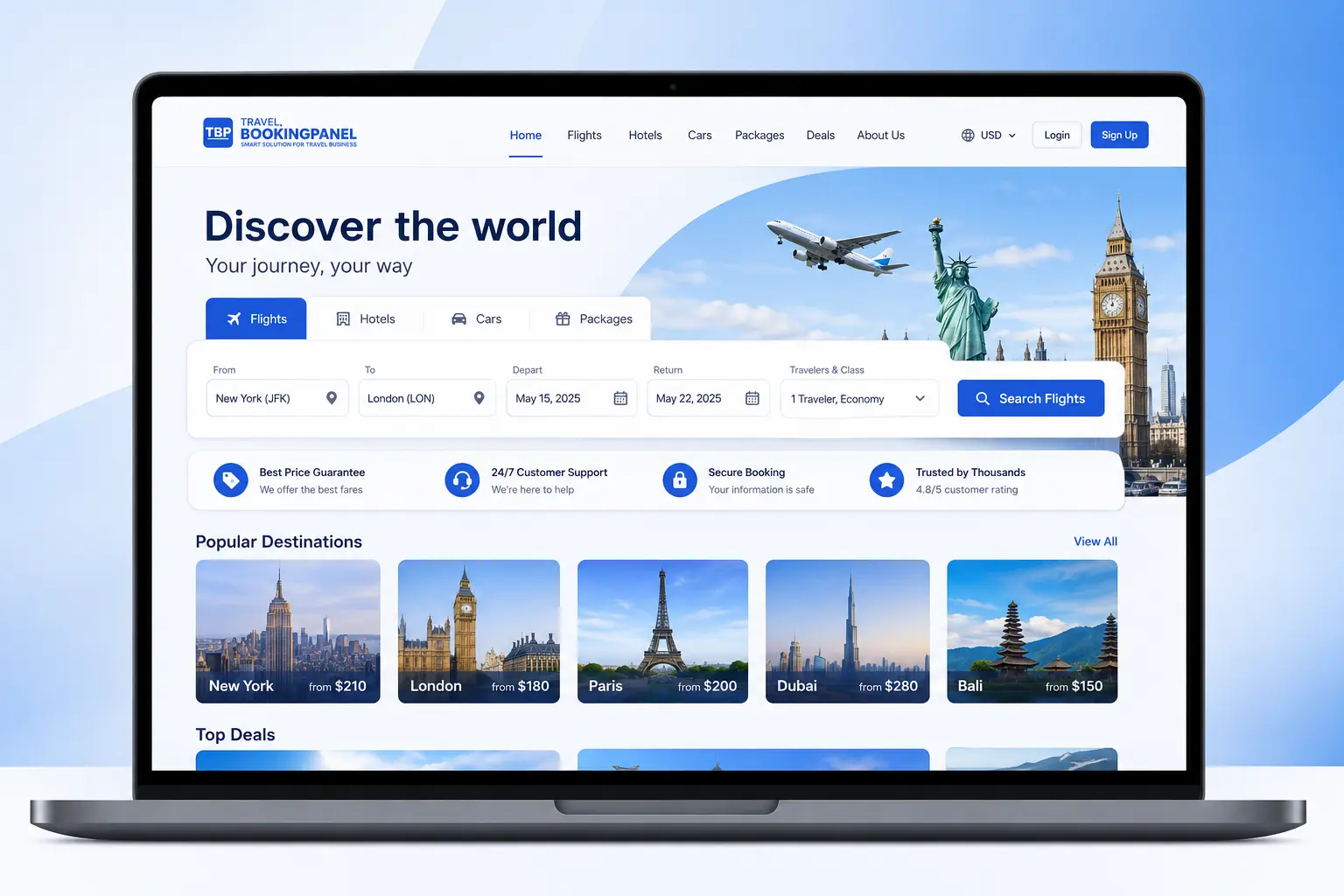
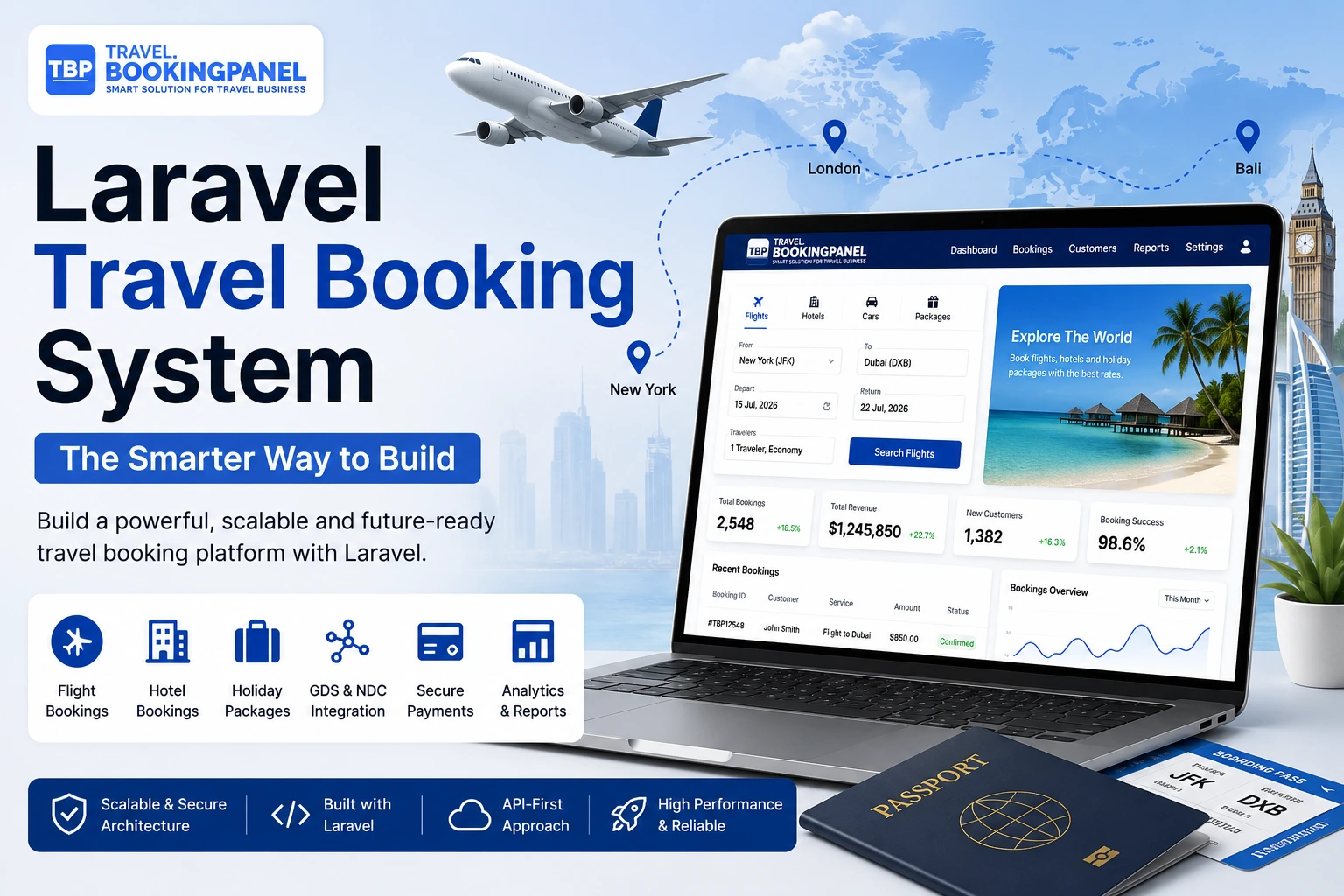
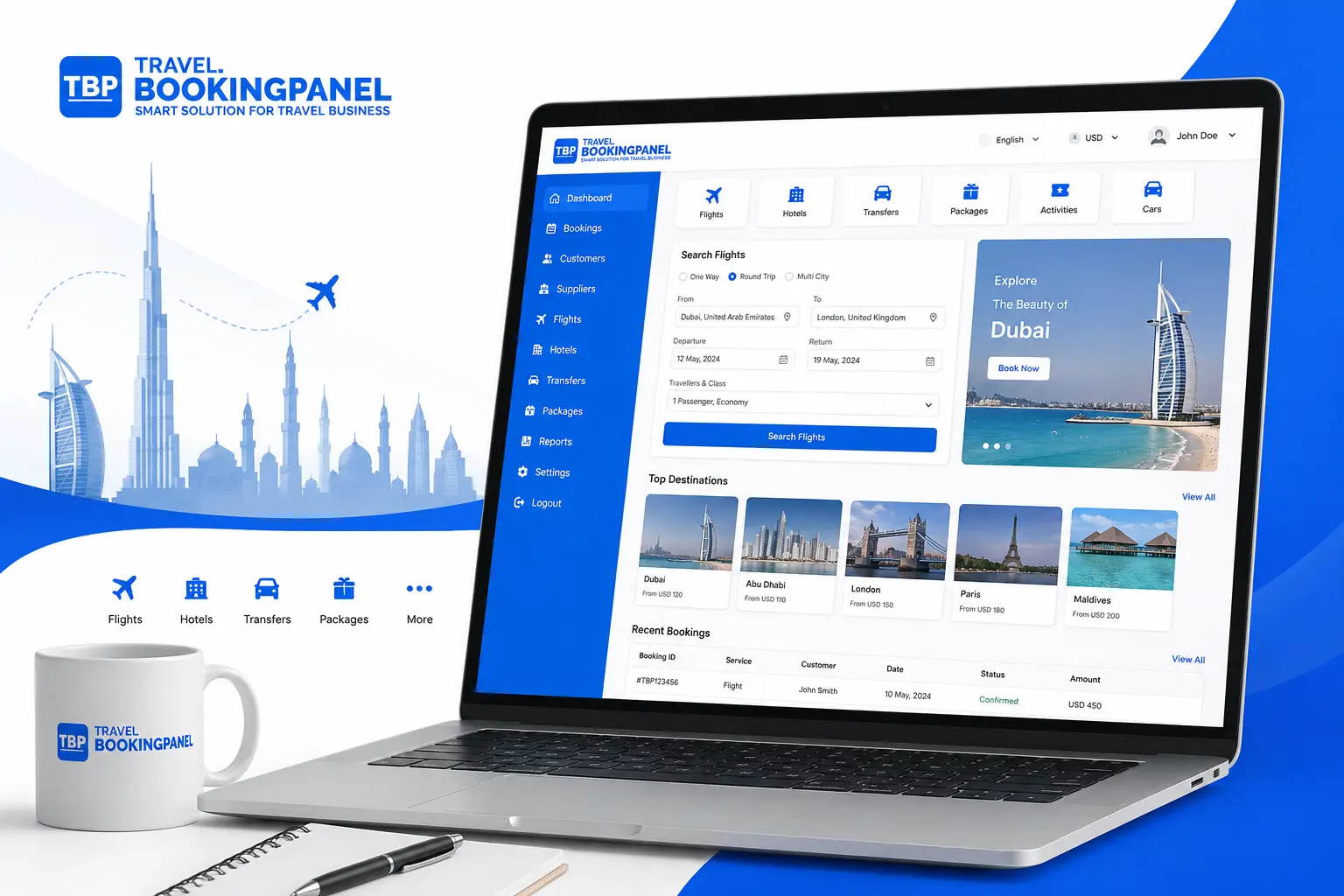
Two platforms with identical feature lists can perform very differently once tested against these specifics. TravelBookingPanel is one platform built specifically around these regional constraints rather than adapted from a Western-market template, and it's worth evaluating against this checklist directly rather than a generic one.
Which Platforms Do Travel Agents Use?
Most Middle East agencies aren't using a single supplier; they're running combinations of bedbanks like Hotelbeds and WebBeds alongside aggregators like RateHawk and regional specialists like Juniper, each chosen for different market coverage.
Hotelbeds and WebBeds tend to have deeper contracted rates in leisure-heavy markets and specific independent properties. RateHawk and similar aggregators offer a broader reach with less negotiating overhead, since they've already aggregated multiple underlying suppliers themselves. Regional specialists often carry inventory in secondary GCC cities that global bedbanks haven't prioritized.
The portal layer that sits on top of these suppliers, handling normalization and markup, matters as much as which individual supplier is connected. An agency with access to the best suppliers but a weak normalization layer will still show agents duplicate or conflicting listings.
Is Expedia a B2B company?
Expedia operates a hybrid model. Its consumer-facing brands (Expedia.com, Hotels.com) are B2C, but Expedia Partner Solutions and its API products serve travel agencies, corporate travel platforms, and other resellers as a B2B supply. It's a useful example of why the B2B/B2C distinction is about the customer relationship and pricing model, not a company's overall identity.
How Much Does a Travel B2B Portal Cost?
Cost is driven less by the base software license and more by integration scope: the number of suppliers connected, the depth of normalization required across them, and how much GCC-specific payment and tax logic needs to be built or configured. Vendors that quote a single flat number without asking about supplier count and regional footprint are usually pricing a simplified version of the problem.
A platform with three suppliers and a single-currency operation is a materially different (and cheaper) build than one running ten-plus suppliers across four GCC currencies with full VAT compliance. Ongoing costs also matter more than the initial build. Supplier APIs change their formats periodically, and someone has to maintain the mapping layer as they do recurring engineering overhead rather than a one-time cost.
Buyers evaluating quotes should ask specifically what happens, and at what cost, when a connected supplier changes its API.
What Is the Best B2B Portal Software?
The honest answer is that "best" depends on whether your agency's primary complexity is supplier count, geographic footprint, or agent hierarchy depth. A platform optimized for one of these isn't automatically optimized for the others. Evaluate against your actual bottleneck, not a generic feature comparison.
What This Leaves for Buyers Evaluating a Platform
The Middle East B2B travel market rewards platforms built around its specific constraints rather than adapted to them after the fact:
- Supplier normalization determines whether agents see clean, deduplicated inventory or the same hotel three times at three prices.
- GCC payment and VAT handling determine whether margin calculations hold up across borders or quietly erode through settlement lag and misapplied tax rates.
- Arabic localization and Ramadan-aware inventory planning determine whether the platform performs during the exact windows when regional demand is highest.
- NDC's uneven rollout means airline distribution still requires the same normalization discipline as hotel supply, not a shortcut around it.
None of this is visible in a feature list that says "multi-currency, multi-language, API integration, white label." It's visible in how a platform behaves when ten suppliers disagree on a hotel's availability during the last ten nights of Ramadan, in three different currencies, for an agent three levels down a sub-agent hierarchy. That's the actual evaluation criteria, and it's a narrower, more useful list than most comparison pages offer.
Tags
Own Your Travel Platform. Forever.
Buy once, own forever. Full source code · No monthly fees · No hidden charges.