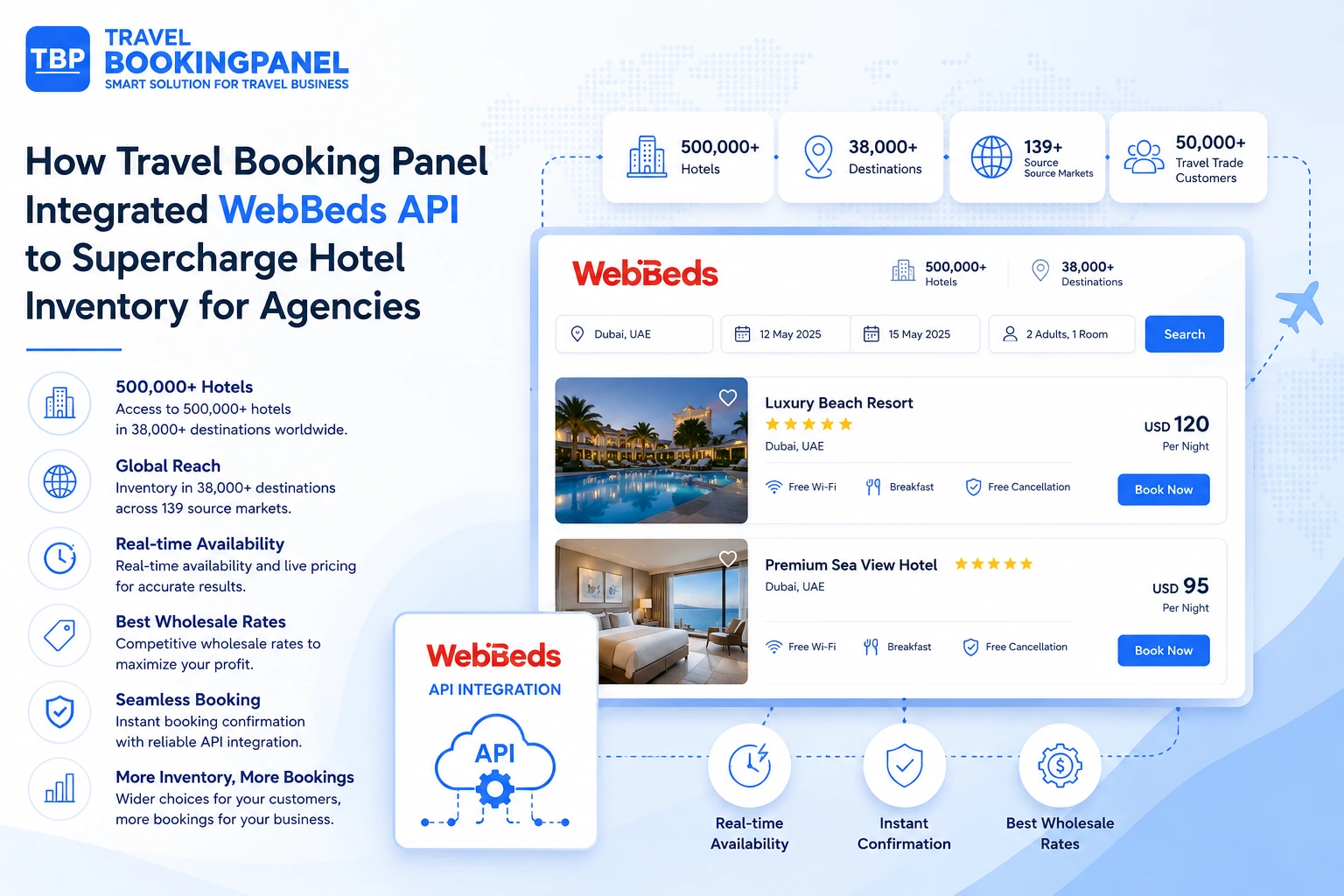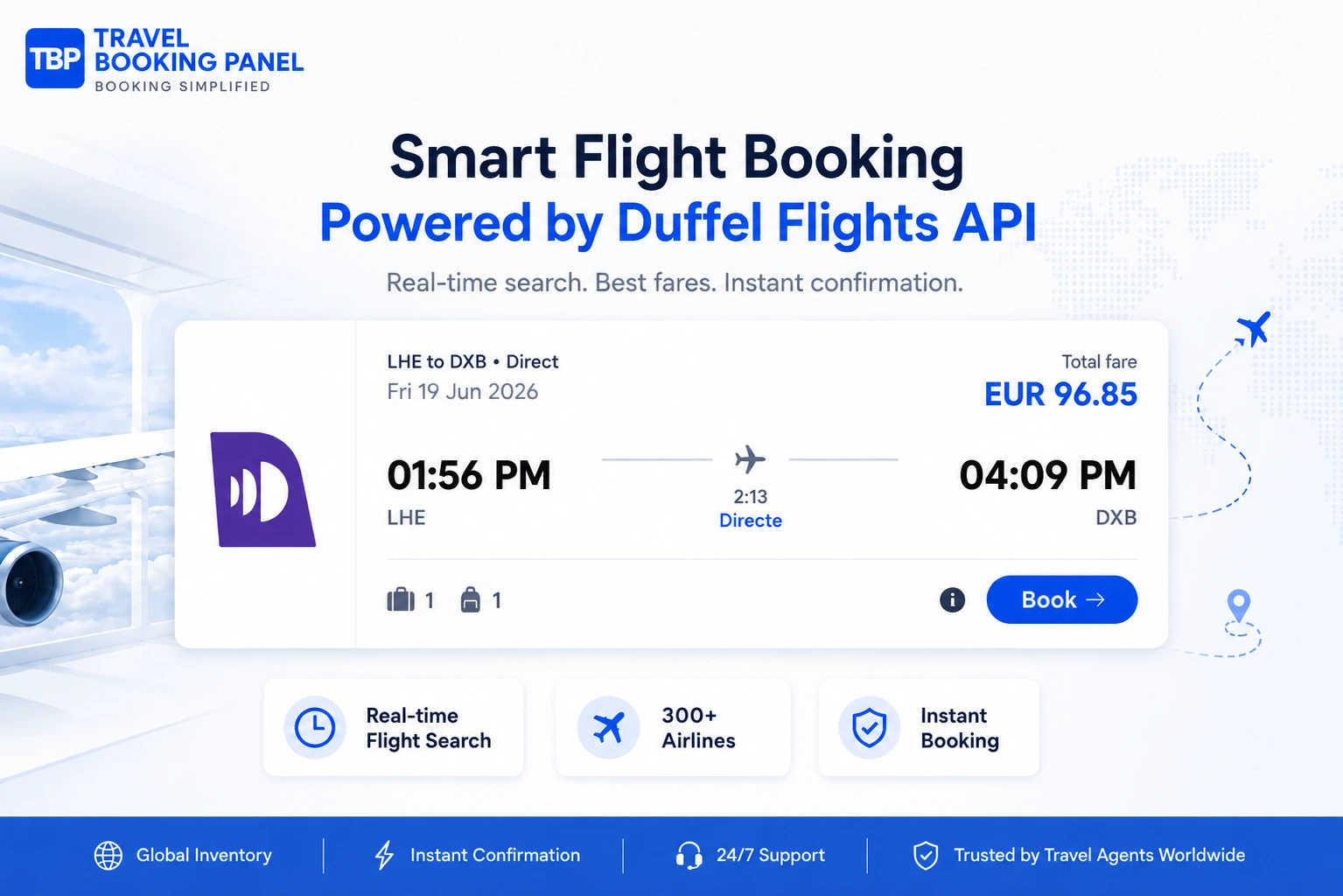
If you run a travel agency, OTA, or B2B flight desk, getting reliable flight content into your platform is one of the hardest parts of the job. You need low far...
If you run a travel agency, OTA, or B2B flight desk, getting reliable flight content into your platform is one of the hardest parts of the job. You need low fares, clean ticketing, and proper post-booking handling across many airlines, without wiring up a dozen connections by hand.
The Duffel API is one of the cleanest ways to solve this in 2026. We'll explain what Duffel actually does, what it costs, how fast you can go live, and where TravelBookingPanel fits into the picture. It's written for travel businesses making a build-or-integrate decision, not for travelers hunting cheap tickets.
Quick Summary
- Duffel is a developer-first travel API that lets any business search, book, and service flights through one modern connection.
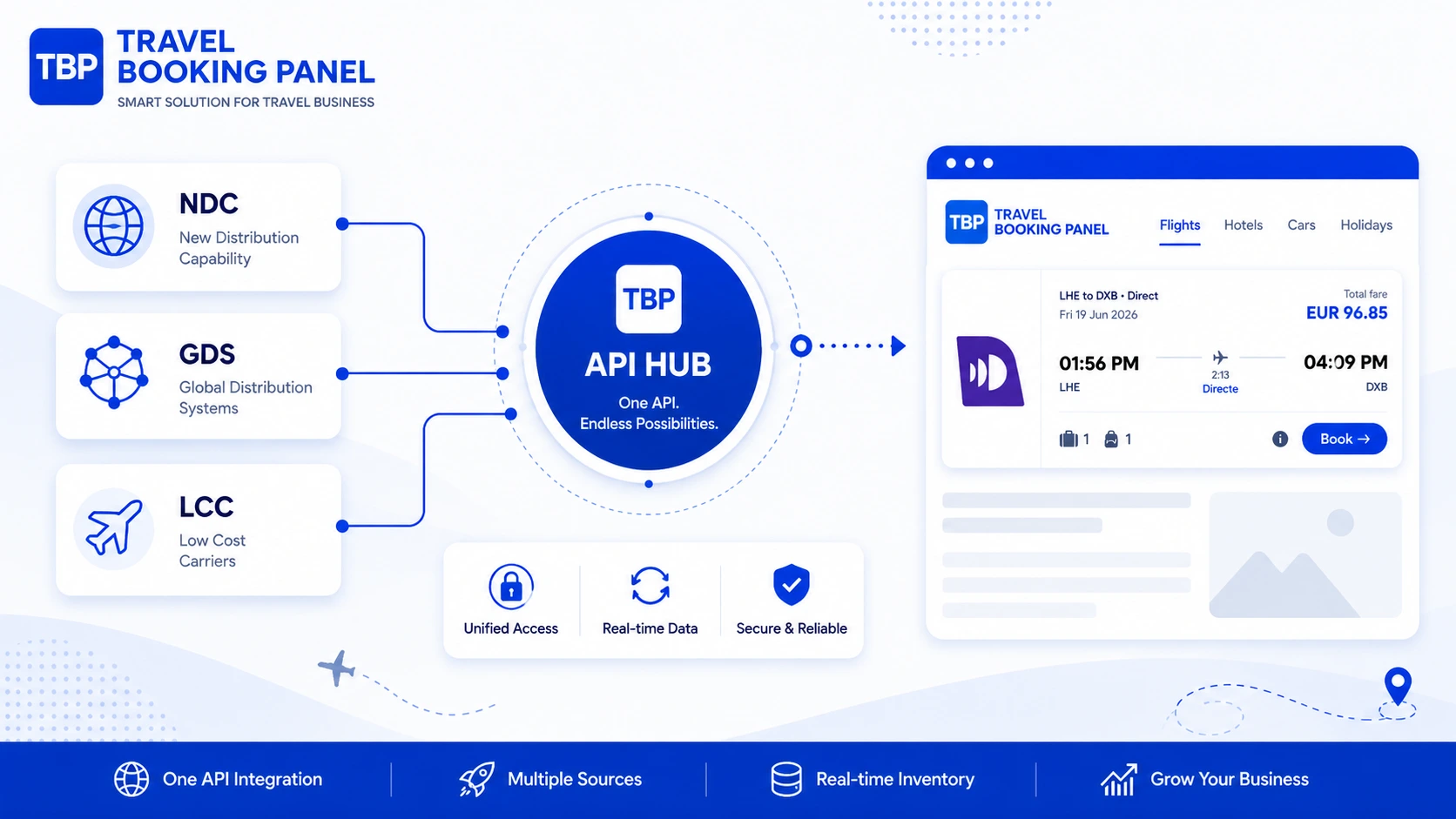
- It pulls content from three sources at once: NDC, GDS, and low-cost carriers across 300+ airlines worldwide.
- Beyond flights, Duffel also offers stays (hotels), cars, and payments, so you can sell more from a single integration.
- Pricing is public and pay-as-you-go; no quote-chasing and no hidden enterprise contract before you can test.
- You can sign up and reach a sandbox in about a minute, but an API is still not a booking system. You need a platform around it, and that's where TravelBookingPanel comes in.
What Is Duffel?
Duffel is a travel-tech toolkit that lets any business sell flights, hotels, and extras through a single API. Instead of integrating each airline or GDS one by one, you connect once and receive normalized flight content in a clean, modern format.
It's backed by Index Ventures and Blossom Capital, and already powers travel inside companies like TravelPerk, Ramp, and Rippling. The big idea: get the power of a full-stack travel agency without years of legacy integrations.
What the Duffel API Actually Does
The API exposes real-time flight content to your booking engine through simple REST calls.
That content includes:
- Live fares, schedules, and seat availability
- NDC offers branded fares and rich content
- Low-cost carrier (LCC) fares
- Ancillary bags, seats, meals, and priority boarding
- Order management issues: change, cancel, and refund
For a travel business, the value is consolidation. One Duffel integration can replace several direct connections you'd otherwise build and maintain yourself.
One API, Three Content Sources
This is what makes Duffel different from a plain GDS pipe.
- NDC (New Distribution Capability) is the airline-direct standard. It unlocks richer content, branded fares, and better ancillary selling, the things that lift your revenue per booking.
- GDS content fills in broad, reliable global coverage so you're never thin on routes.
- LCC content captures the budget carriers that classic GDS often misses.
Duffel blends all three behind one API, so your team builds against a single format instead of three.
What You Can Build With Duffel
Most guides stop at flights. Duffel is wider than that.
- Flight search, booking, tickets, and service across 300+ airlines.
- Stays access to 2M+ hotel properties, with a profit share on completed stays.
- Cars are a ground transport to round out an itinerary.
- Payments Duffel can act as the merchant of record, so you can charge customers and apply your own markup instantly, even without your own IATA/ARC accreditation.
That last point matters for new agencies. It removes a licensing barrier that used to block smaller players entirely.
How a Duffel Booking Flows
The workflow maps cleanly onto how agencies actually transact.
- Search your engine for origin, destination, dates, and passengers. Duffel returns aggregated offers.
- Confirm the price fares move between search and book, so you revalidate the live price before issuing. This protects you from price mismatches and failed payments at checkout.
- Book and ticket once confirmed, the order is created, and the e-ticket is issued. Store the order and ticket details for servicing later.
- Service changes, cancellations, and refunds run through the same API, ideally with clean audit logs for your back office.
Duffel Pricing: Transparent, Not a Black Box
Here's where Duffel stands out from older suppliers that hide pricing behind a sales call. Duffel publishes its pricing openly and bills pay-as-you-go; you pay per usage, not per seat or per month.
At the time of writing, public pricing starts around $3 per flight order, with additional usage-based fees (for example, a percentage on managed content and a small fee per ancillary). Stays earn you a profit share on completed bookings.
Always check the live pricing page for current figures before you commit, but the point stands: you can see the numbers before you talk to anyone. That transparency is rare in this industry, and it's a real reason agencies choose Duffel.
Airline Coverage
Coverage is usually the first question, so be precise: Duffel offers 300+ airlines spanning full-service and low-cost carriers globally. That includes legacy names like Emirates, Qatar Airways, and Lufthansa, plus LCCs like flydubai, Air Arabia, and Wizz Air.
New airlines are added on Duffel's side, and your platform gains access without extra code. Practical tip: don't choose an airline account alone. Test coverage against your own core routes and markets before you build.
How Fast Can You Go Live?
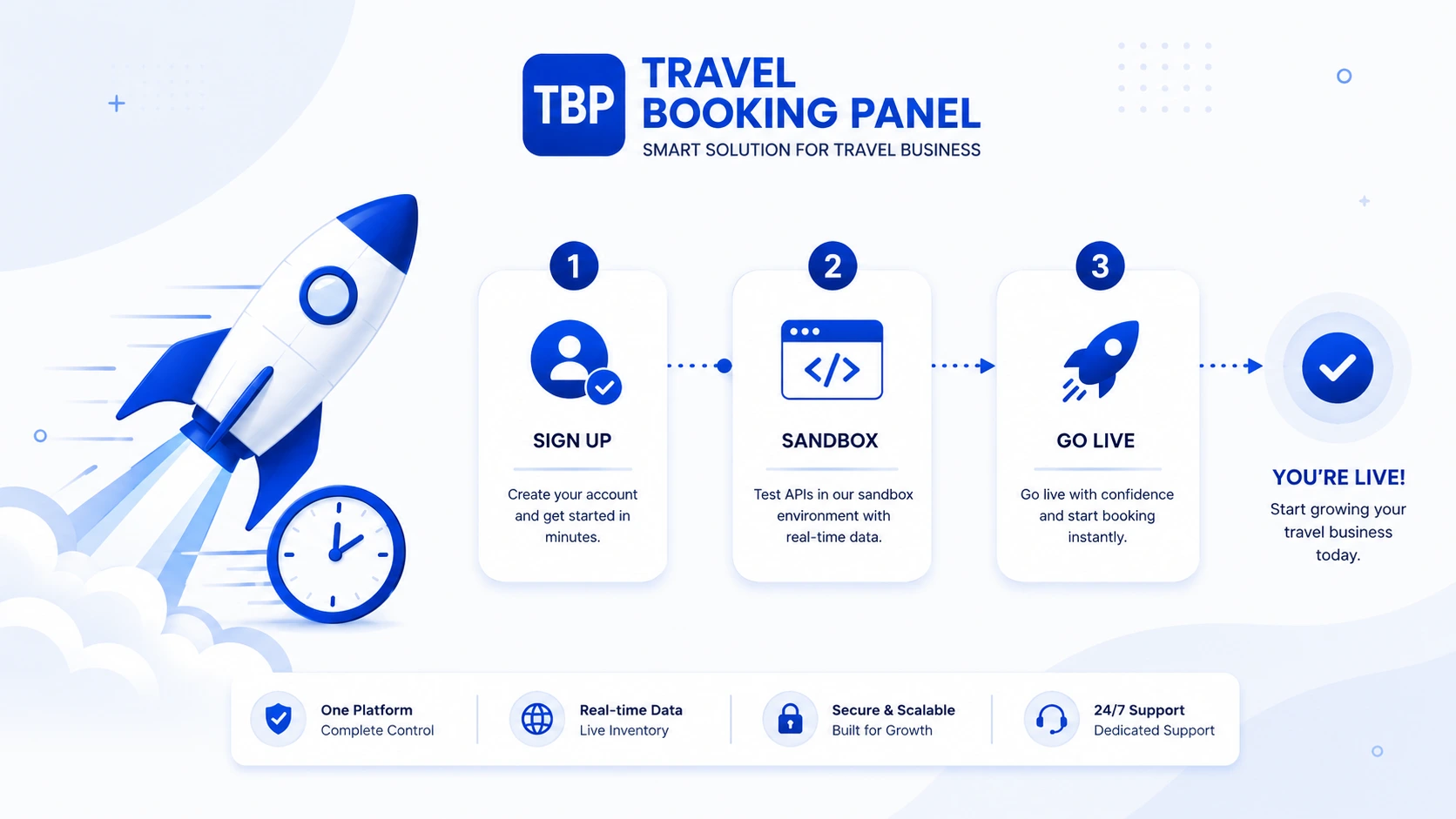
This is Duffel's quiet advantage. Legacy suppliers can take weeks of onboarding and approvals before you write a single line of code. With Duffel, you can sign up, get an API key, and hit a sandbox in about a minute.
Documentation is public, SDKs cover multiple languages, and most teams complete a real integration in a few weeks rather than months. Faster time to live means faster time to revenue, which is the only metric that pays your bills.
Common Mistakes Agencies Make
The agencies that struggle usually trip on the same things.
- Treating the API as a finished product. It provides content, not a storefront, an agent panel, or an accounting system.
- Skipping the reprice step, then losing money to price mismatches.
- Ignoring post-booking flows until a refund request exposes the gap.
- Choosing headline airline numbers instead of testing real routes.
- Building the platform layer from scratch, burning months on work that already exists off the shelf.
The Gap Duffel Leaves
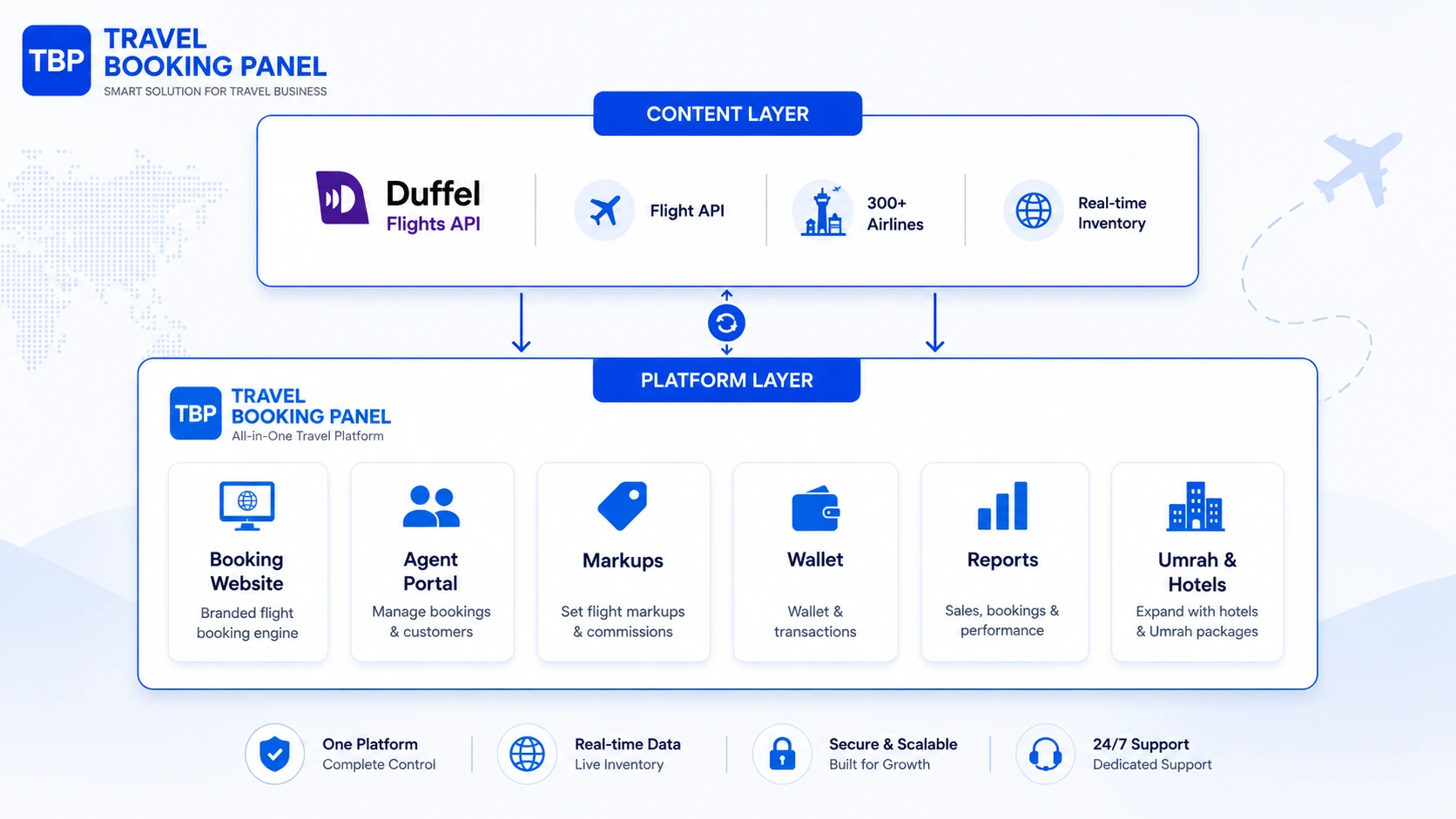
Duffel gives you world-class flight content and ticketing. It does not give you the business around it. It won't give you a branded customer website, a B2B agent network, a markup engine, multi-currency, wallets, or back-office reporting. That platform layer is where your actual operation runs, and building it yourself is slow and expensive.
Where TravelBookingPanel Comes In
TravelBookingPanel is the platform layer that turns the Duffel API into a running travel business. It connects flight content like Duffel through its flight module and custom API adapters, then wraps it in everything Duffel deliberately leaves out:
- A white-label B2B + B2C booking website with search, reprice, and e-ticketing
- Markup, commission, and wallet controls for sub-agents
- Cancellation and refund handling with proper records
- Admin dashboards and reporting for revenue, bookings, and operations
- Hotels, Tours, Umrah, and Visa modules, so flights are just the start
And unlike subscription platforms, TravelBookingPanel is a one-time purchase with full source code; you own it forever, with no per-transaction fees eating your margin.
Why This Combo Wins for Gulf, Umrah & Arabic-Market Agencies
Most flight-API guides ignore this market completely. That's a mistake. Duffel's coverage of Gulf carriers Emirates, Qatar, flydubai, and Air Arabia is strong, which makes it a natural fit for agencies serving Middle Eastern and Umrah travelers.
Pair that with TravelBookingPanel's full Arabic RTL interface, dedicated Umrah operations suite, and multi-currency support, and you have a stack built for that exact audience, not a generic Western OTA template bent to fit. That's the combination competitors don't talk about. It's the one your market is actually searching for.
Frequently Asked Questions
What is the Duffel API used for?
It gives travel businesses programmatic access to flight content search, booking, ticketing, ancillaries, and servicing from 300+ airlines through one integration, plus hotels, cars, and payments.
How many airlines does Duffel cover?
300+ globally, across full-service and low-cost carriers, through a blend of NDC, GDS, and direct connections. Always test against your own routes.
Is Duffel pricing public?
Yes. Duffel publishes pay-as-you-go pricing openly, starting around a few dollars per flight order, with usage-based fees on top. Check the live page for current numbers.
Do I need my own IATA or ARC accreditation?
Not necessarily. Duffel Payments can act as the merchant of record, so you can sell and charge without it, though you can use your own accreditation if you have it.
Can I use Duffel without building a full booking system?
No, the API supplies content, not a storefront, agent panel, or reporting. You still need a platform layer. TravelBookingPanel provides exactly that and connects to your flight content.
How long does a Duffel integration take?
Sandbox access takes about a minute; a production integration typically takes a few weeks, depending on your team and platform.
Ready to Sell Flights the Modern Way?
Duffel handles the content. TravelBookingPanel handles the business around it, and you own the whole thing. See the flight module in action before you commit. Book a Live Demo.
Own Your Travel Platform. Forever.
Buy once, own forever. Full source code · No monthly fees · No hidden charges.